
How Far Should a Generator Be Away from the House?
Backup generators are indispensable during emergencies, providing power to homes and essential appliances when the grid fails. However, the convenience they offer comes with potential dangers, particularly in the form of Carbon Monoxide (CO) gas. This colorless and odorless gas can pose severe health risks if not handled with care.

See Also: How to Hooking Up a Generator?
How Far Should a Generator Be Away from the House? – Comprehensive Guide
In this comprehensive guide, we will explore the basics of generators, the hazards of CO, and address the crucial question: How far should a generator be from the house?
1. Understanding Generators: Types and Operations
Generators, both portable and standby, serve as electromechanical devices that convert mechanical energy into electricity. Typically driven by internal combustion engines, these engines can run on fuels like gasoline, diesel, propane, or natural gas.
The need for generators arises during unpredictable weather conditions or natural disasters that disrupt the electricity grid. Portable generators, equipped with wheels and handles, are easily transportable, while standby generators remain fixed at a permanent location, ready to take over during power outages.
2. Mechanics of a Generator
The core components of a generator are the engine and the alternator. The engine, often an internal combustion engine, generates rotational mechanical power. This rotational force is then converted into electricity by the alternator.
The type of fuel used varies, with gasoline and diesel being common choices for portable and standby generators. Understanding the mechanics is crucial for appreciating the potential hazards associated with generator use.
3. Carbon Monoxide: A Silent Threat
The combustion of fuels in generators produces not only electricity but also gases, including Carbon Dioxide (CO2) and Carbon Monoxide (CO). CO, however, is particularly hazardous, and incomplete combustion can lead to a significant release of this poisonous gas.
Unlike CO2, which is relatively harmless in small quantities, CO is a silent threat due to its colorless and odorless nature. Inhaling CO can result in carbon monoxide poisoning, with symptoms ranging from headaches and nausea to severe illness and, in extreme cases, death.
How Far Should a Generator Be From the House?
The critical question for generator owners and buyers is the appropriate distance between the generator and the house. While a perfect world scenario would dictate placing the generator as far away as possible, practical installations often necessitate compromise. Multiple organizations, including the CDC, NIST, and local governing bodies, provide recommendations. While there is no definitive distance, experts generally suggest maintaining a distance of at least 20 feet between the generator and the house.
Additional Guidelines for Safe Placement
- Follow the 20 Feet Rule: Aim for a distance of at least 20 feet between the generator and the house. If this is impractical, consider a minimum of 15 feet. In extreme cases, never place the generator less than 5 feet away from the house.
- Generator-Grade Extension Cords: Even at a distance, powering appliances is possible using high-quality generator-grade extension cords.
- Avoid House Openings: Never place the generator near windows, doors, vents, or any other openings in the house.
- Exhaust Direction Matters: Ensure that the exhaust side of the generator faces away from the house. Consider wind direction to prevent exhaust gases from being blown toward the house.
- Avoid Closed Environments: Generators should never be used indoors, in garages, or sheds. Adequate ventilation is crucial for the safe operation of generators.
- Consider Exhaust Extension Fittings: For situations where close placement is unavoidable, exhaust extension fittings redirect gases away from the generator’s immediate vicinity.
- Manufacturer Recommendations: Different manufacturers may provide specific suggestions for generator placement. Thorough research is essential, especially for standby generators, which involve one-time and permanent installations.
Do’s and Don’ts with Generators
- Consult with Experts: Seek advice from professionals, especially if you are new to generators, as improper use can be life-threatening.
- Weather Considerations: Exercise extra caution in adverse weather conditions. Avoid running generators directly under rain, and use tent-like structures for protection while maintaining proper ventilation.
- Carbon Monoxide Detectors: Invest in quality carbon monoxide detectors, placing them strategically to monitor gas levels. Some generators come equipped with built-in detection systems.
- Refueling Safety: Turn off and cool down the generator before refueling, regardless of the fuel type used.
- Advanced Generator Features: Consider generators with advanced features like automatic shutdown in case of high carbon monoxide levels.
Whole-Home Generators: Specific Considerations
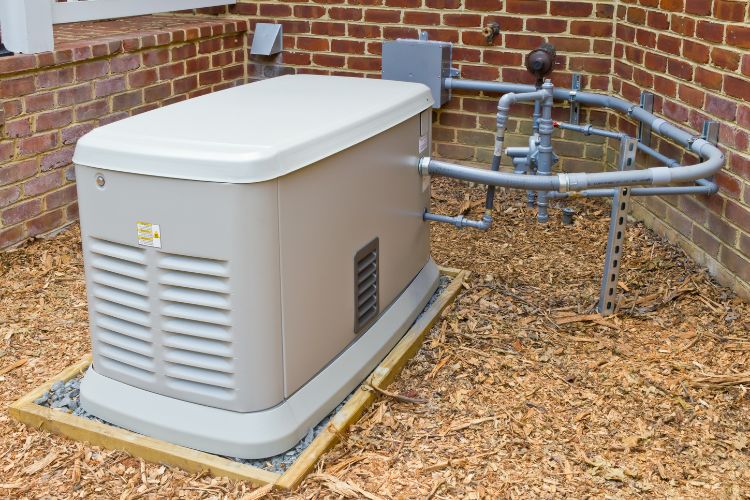
Whole-home or standby generators, designed for automatic activation during power outages, have specific regulations and recommendations.
- Fire Code Requirements: The NFPA mandates that whole-home generators should be at least 1.5 feet away from the home and any outbuildings. Additionally, they must not be within 5 feet of windows or doors, with no vegetation taller than 12 inches within 3 feet of the unit.
- Manufacturer and Local Regulations: Follow manufacturer recommendations for placement distance, and adhere to local regulations. Many states require generators to be at least 20 feet from neighboring homes.
- Exhaust and Noise Concerns: Ensure the generator’s exhaust faces away from the home, and consider noise levels, especially if close to property lines.
- Proximity to Fuel Source: If connected to a natural gas supply, choose a location close to the gas meter to minimize installation costs.
- Concrete Pad Requirements: The weight of whole-home generators necessitates a sturdy concrete pad. Soil composition and flood-prone areas should be considered when selecting a location.
Conclusion
Generators are invaluable in times of need, providing essential power during emergencies. However, the potential dangers, especially the release of Carbon Monoxide, demand careful consideration of placement. While a perfect world might allow for ample distance, practical constraints require adherence to safety guidelines.
Whether with portable generators or whole-home systems, understanding the risks and following recommended safety measures ensures worry-free generator use during critical times. Prioritizing safety and compliance with regulations is the key to harnessing the benefits of generators without compromising well-being.
Read Also: How to Turn Off a Generac Generator?


