Tool Drawers: 11 Smart Storage That Actually Works
Tired of messy drawers and hard-to-find tools? Explore these tool drawers organization ideas to create a clean, functional, and efficient workspace.
I didn’t realize how much time I was wasting until I opened my kitchen tool drawer one morning and everything jammed.
Spatulas tangled with tongs, measuring cups buried under peelers, and the whisk I needed somehow always missing. It looked harmless, but that messy drawer slowed me down every single day.
At first, I thought I just had “too many tools.” But the real problem wasn’t the number—it was the lack of structure. A poorly organized tool drawer turns simple cooking into a daily irritation, especially when you cook often or share the kitchen with family.
Once I started rethinking how tool drawers should actually work, everything changed. With the right layout, dividers, and placement, a tool drawer becomes one of the most efficient parts of the kitchen.
In this guide, I’ll share smart tool drawer ideas that keep essentials visible, accessible, and stress-free—no more digging, no more chaos.
Contents
Why Tool Drawers Outperform Open Storage and Shelving
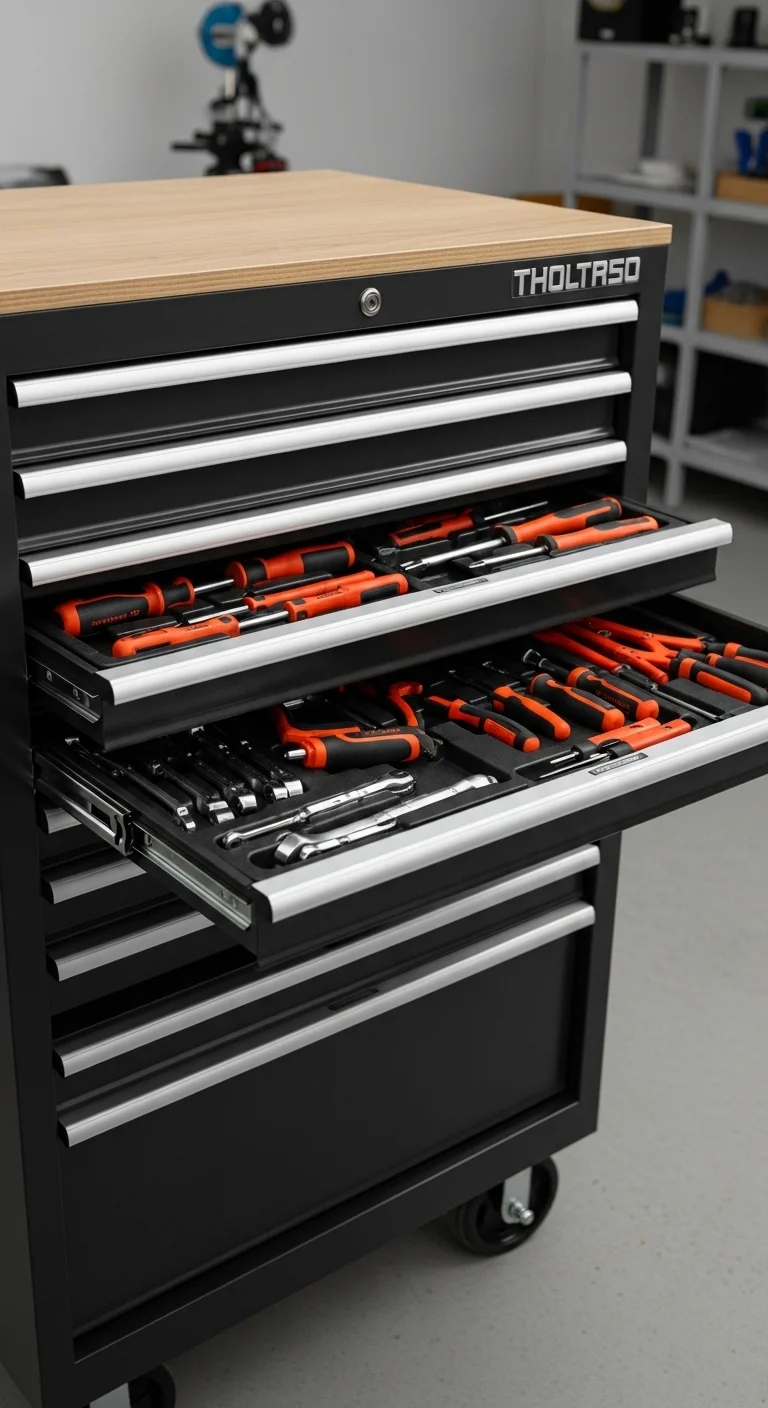
Tool drawers offer a level of organization that open shelving often fails to maintain over time. Drawers protect tools from dust, moisture, and accidental damage caused by constant exposure.
Keeping tools enclosed also improves safety by reducing the risk of falls or injuries. When every tool has a dedicated place, work becomes faster and more efficient.
Tool drawers encourage better habits by making organization easier to maintain consistently. This structured approach helps users focus on productivity instead of searching for misplaced tools.
How to Plan Tool Drawers Around Usage and Space
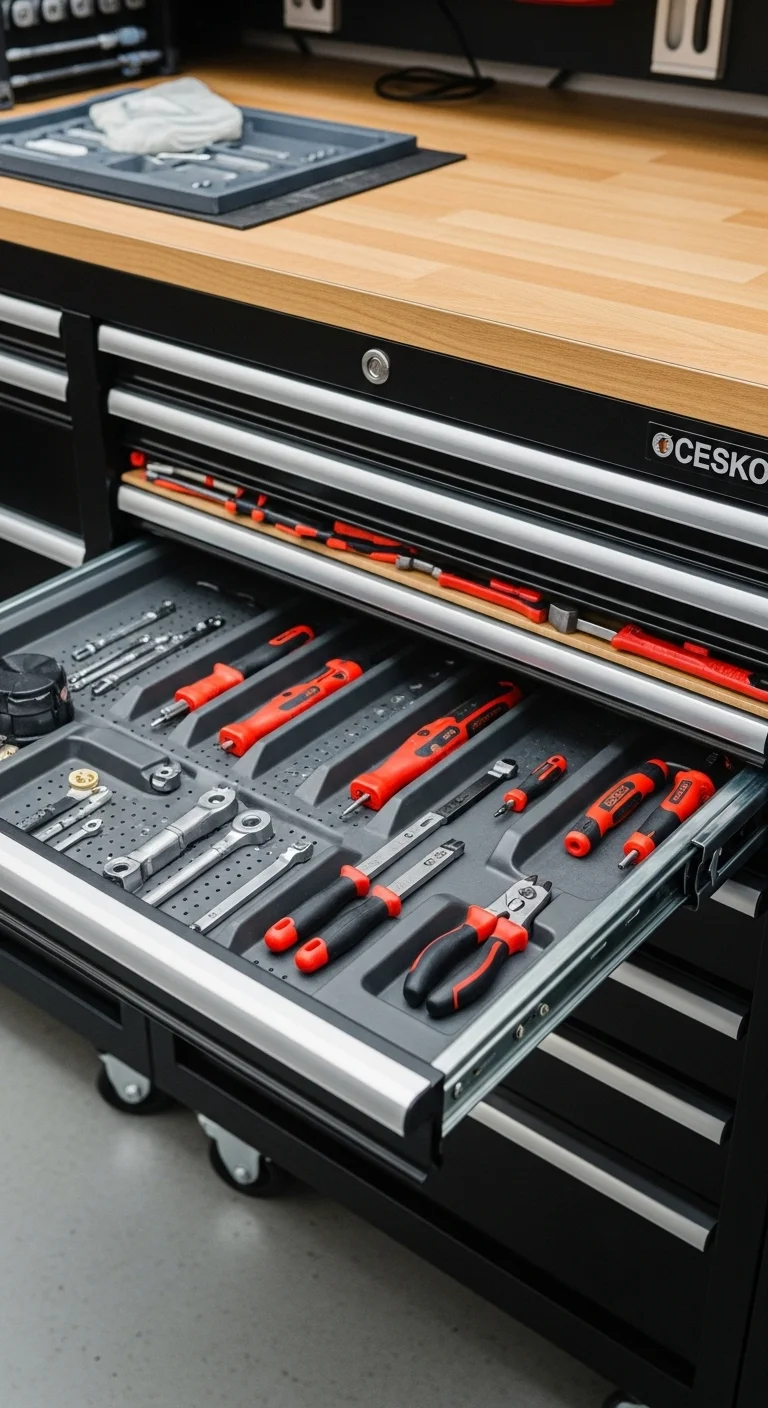
Effective tool drawers planning begins with understanding how frequently tools are used and where tasks usually take place.
High-use tools should remain within easy reach, while less-used items can occupy deeper or lower drawers.
Considering drawer depth, weight capacity, and layout prevents overcrowding and strain. Proper planning also ensures that available workspace remains open and functional.
When tool drawers match real usage patterns, daily tasks feel smoother and less frustrating. This thoughtful approach helps users build storage systems that support long-term efficiency.
11 Tool Drawers Ideas
Deep Tool Drawers for Storing Large and Bulky Tools
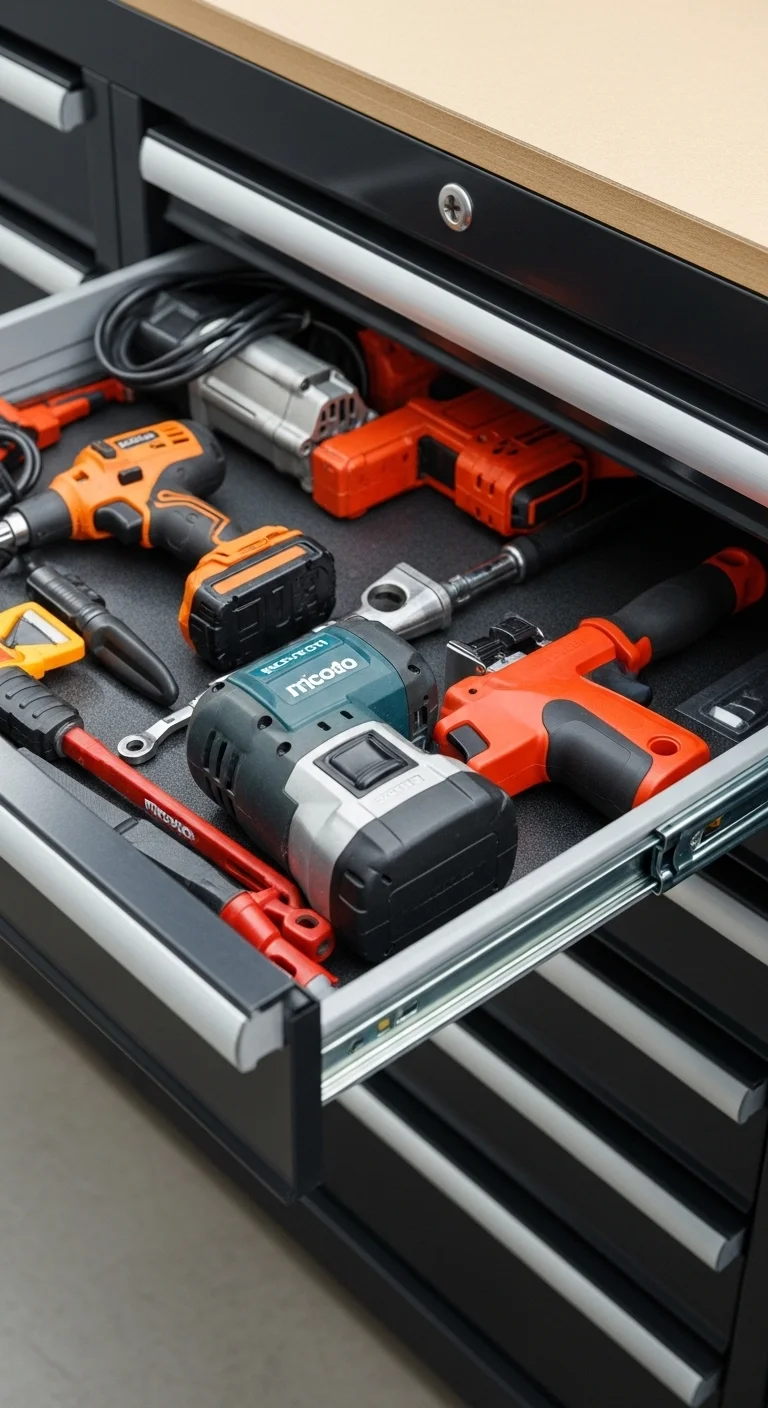
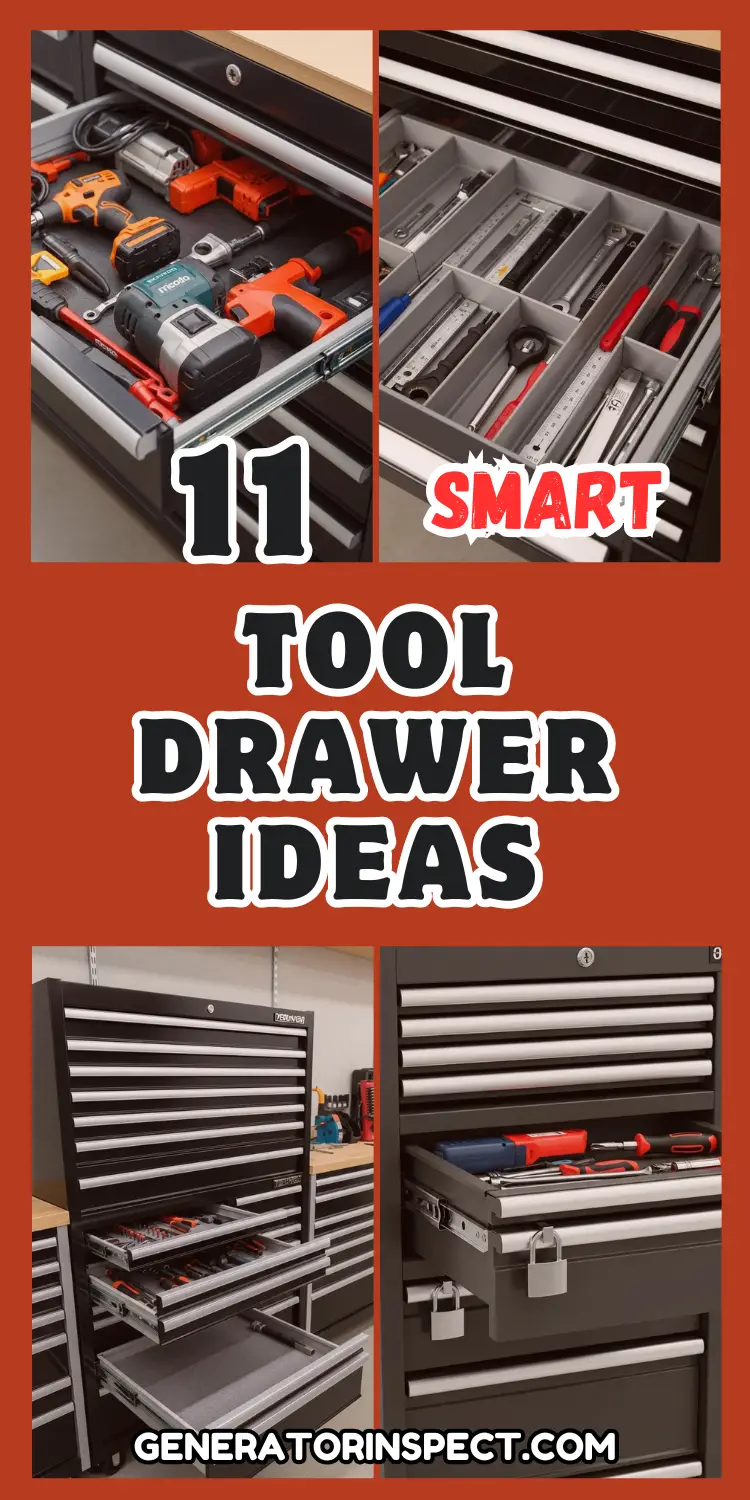
Deep tool drawers provide the space needed to store larger tools without stacking or forcing awkward arrangements.
These drawers work well for power tools, larger hand tools, and equipment that requires careful placement.
By reducing stacking, deep drawers improve visibility and lower the risk of accidental damage.
Heavy-duty slides support weight while ensuring smooth operation during frequent use. Proper spacing within deep tool drawers also improves airflow and cleanliness.
This tool drawer idea supports efficient workflows by keeping bulky tools organized, accessible, and protected during daily use.
Shallow Tool Drawers for Precise Small Tool Organization
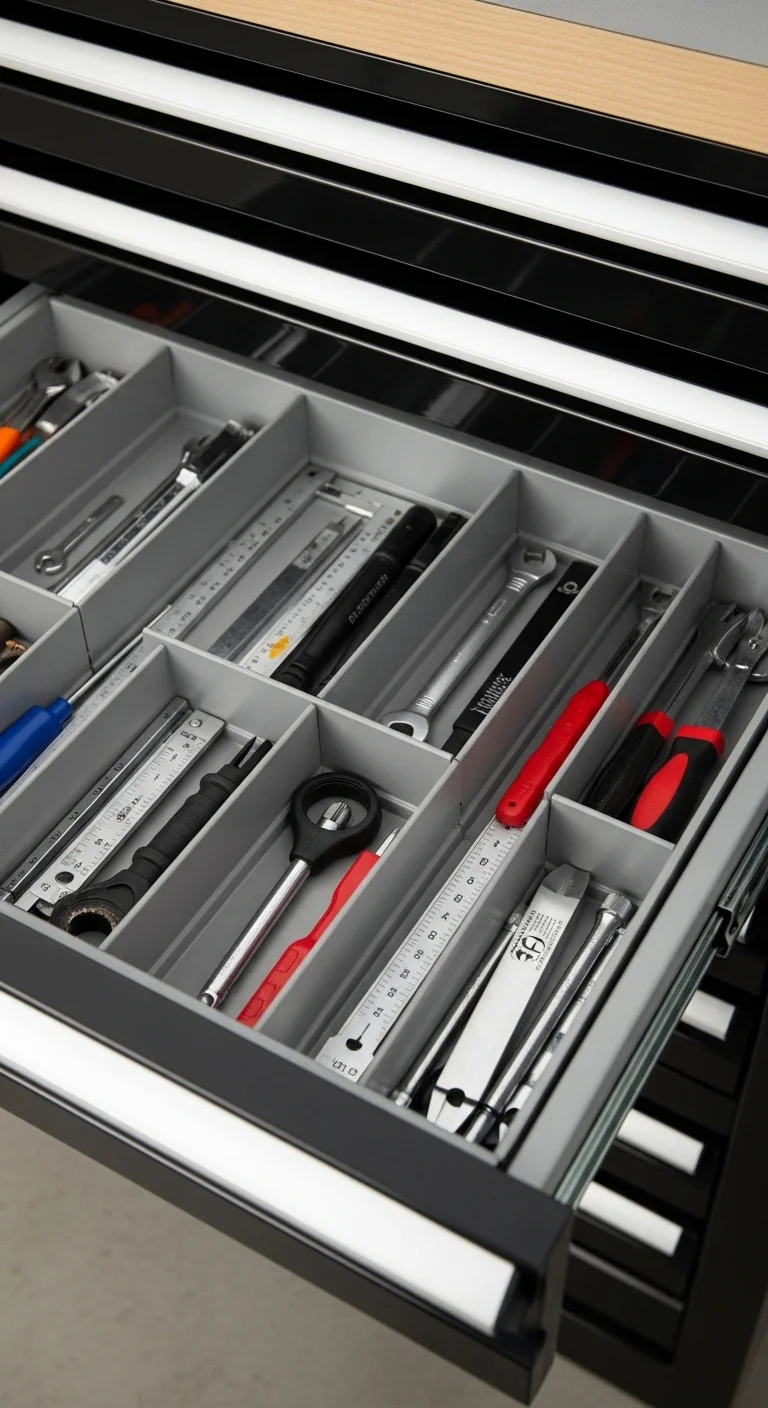
Shallow tool drawers excel at organizing smaller tools that often become cluttered or misplaced.
These drawers allow users to see contents clearly without rummaging through stacked items. Shallow depth encourages neat layouts that support quick identification and retrieval.
Adding simple dividers helps separate tools while preventing movement during drawer operation. This setup works well for measuring tools, accessories, and frequently used hand items.
By using shallow tool drawers effectively, users maintain cleaner workspaces and reduce wasted time searching for tools.
Modular Tool Drawers for Flexible Storage Needs
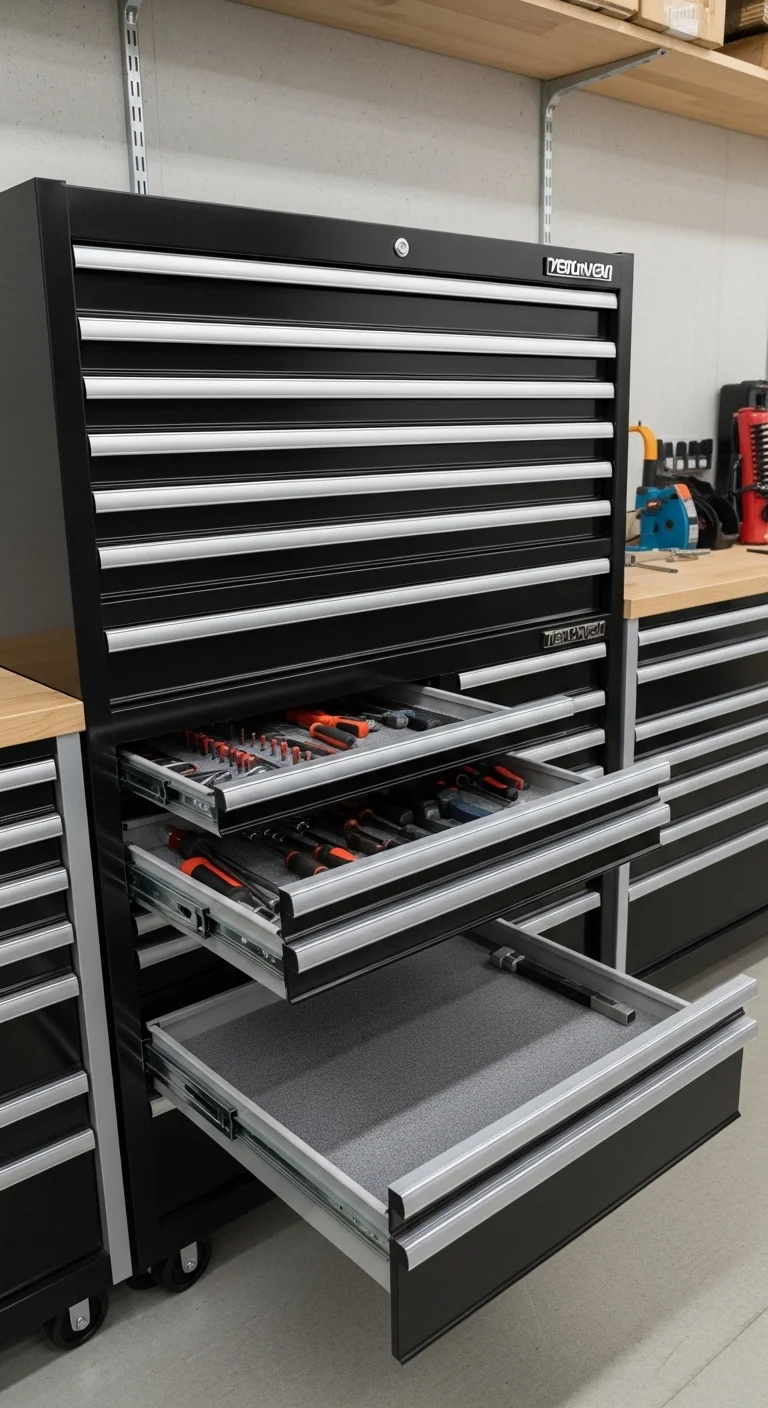
Modular tool drawers provide flexibility by allowing users to rearrange layouts as tool collections grow or change.
This system supports customization without requiring complete storage replacement. Users can adjust drawer sizes and positions based on evolving needs.
Modular designs help maximize available space while maintaining organization. This flexibility makes modular tool drawers ideal for workshops with changing projects.
By adapting storage instead of forcing tools into fixed layouts, users maintain efficiency and long-term satisfaction.
Lockable Tool Drawers for Security and Safety
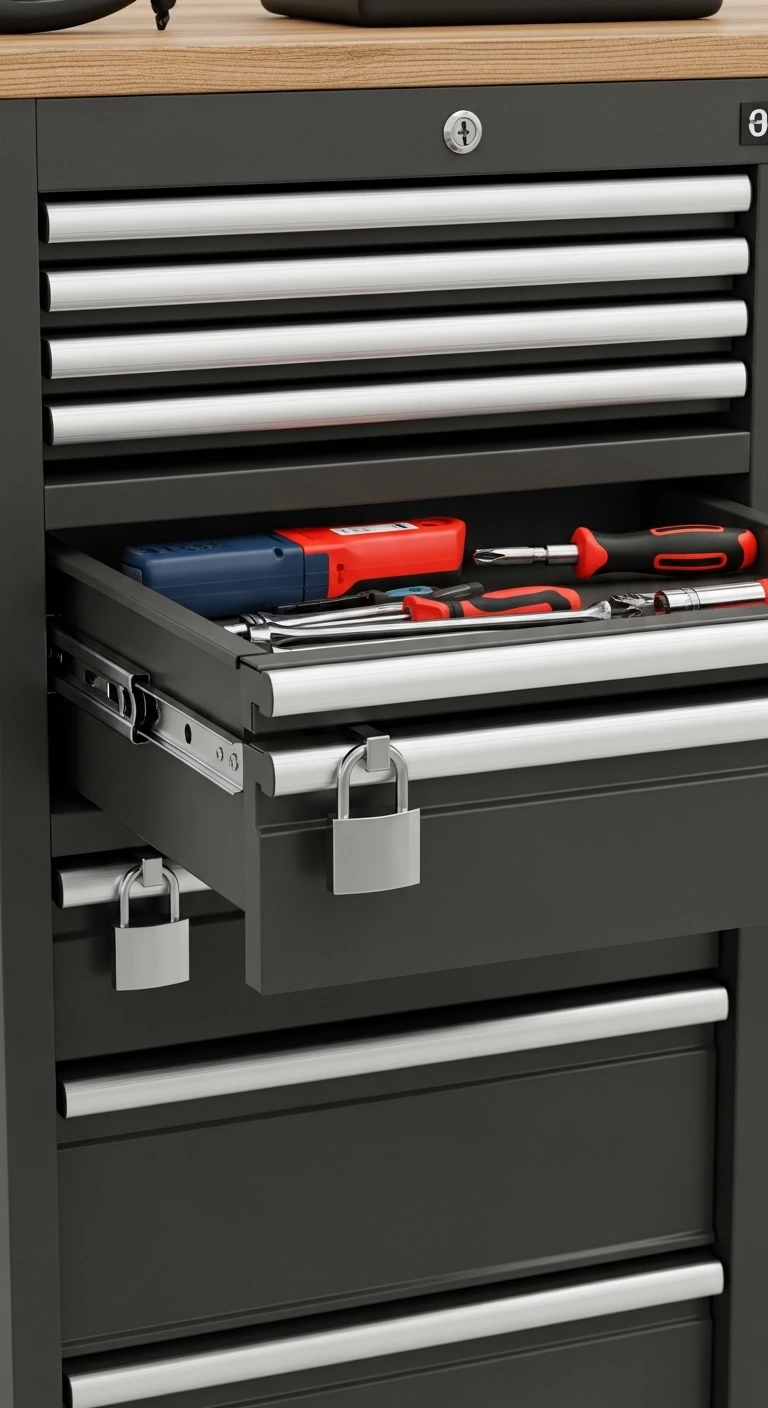
Lockable tool drawers add an important layer of security, especially in shared or open work environments.
These drawers protect valuable tools from unauthorized access and accidental misuse. Locks also improve safety by keeping sharp or heavy tools secured when not in use.
Despite added security, lockable drawers still maintain accessibility for authorized users. This design supports responsible tool management practices.
Lockable tool drawers offer peace of mind while preserving organization and workflow efficiency.
Soft-Close Tool Drawers for Smoother Daily Use
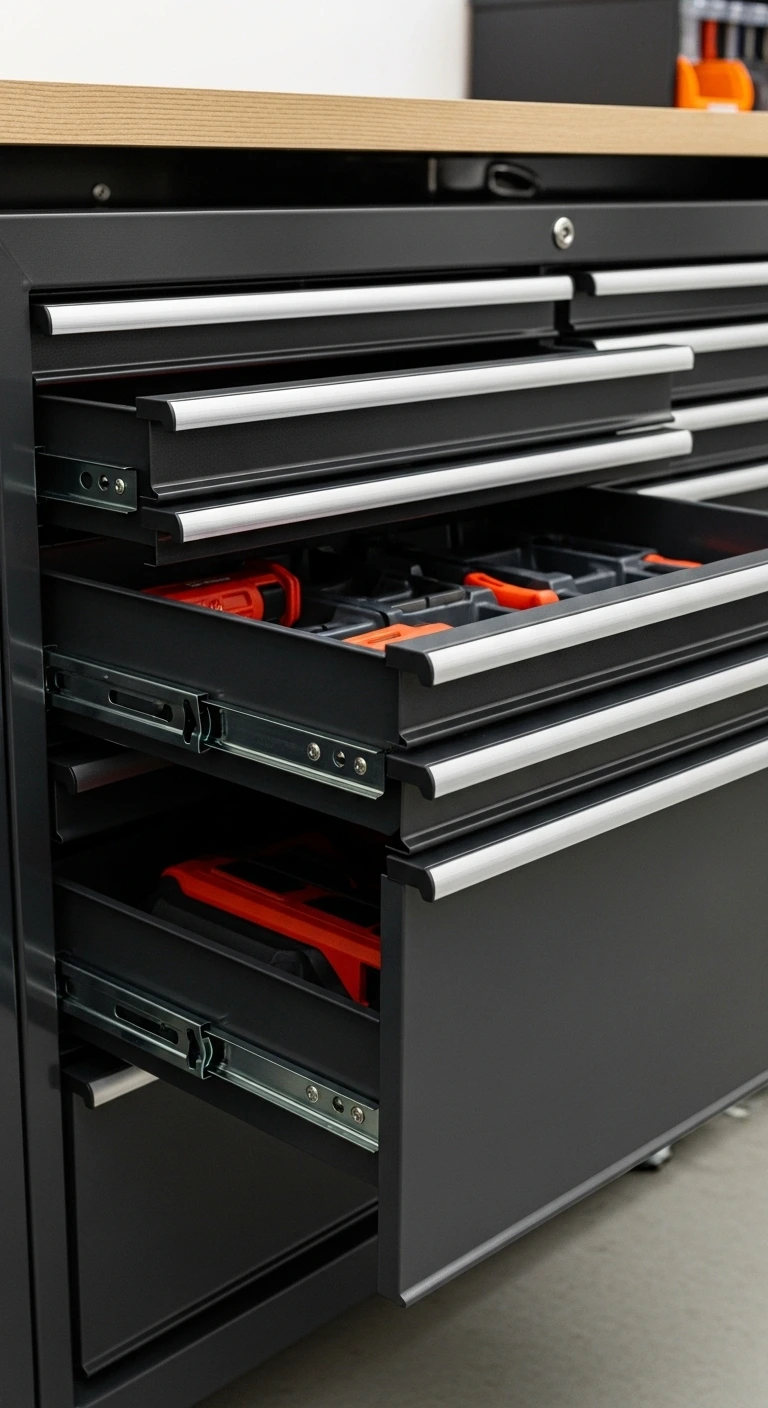
Soft-close tool drawers improve everyday usability by preventing drawers from slamming shut during regular use.
This feature reduces stress on drawer slides, hardware, and tool contents over time. Controlled closing also helps protect delicate tools from sudden movement or impact.
Soft-close mechanisms minimize noise, which benefits shared or indoor workspaces. These drawers encourage careful handling while maintaining smooth and consistent operation.
By reducing wear and tear, soft-close tool drawers extend the lifespan of both the storage system and stored tools.
This tool drawer idea supports long-term durability while creating a more comfortable and efficient working environment.
Drawer Divider Tool Drawers for Detailed Organization
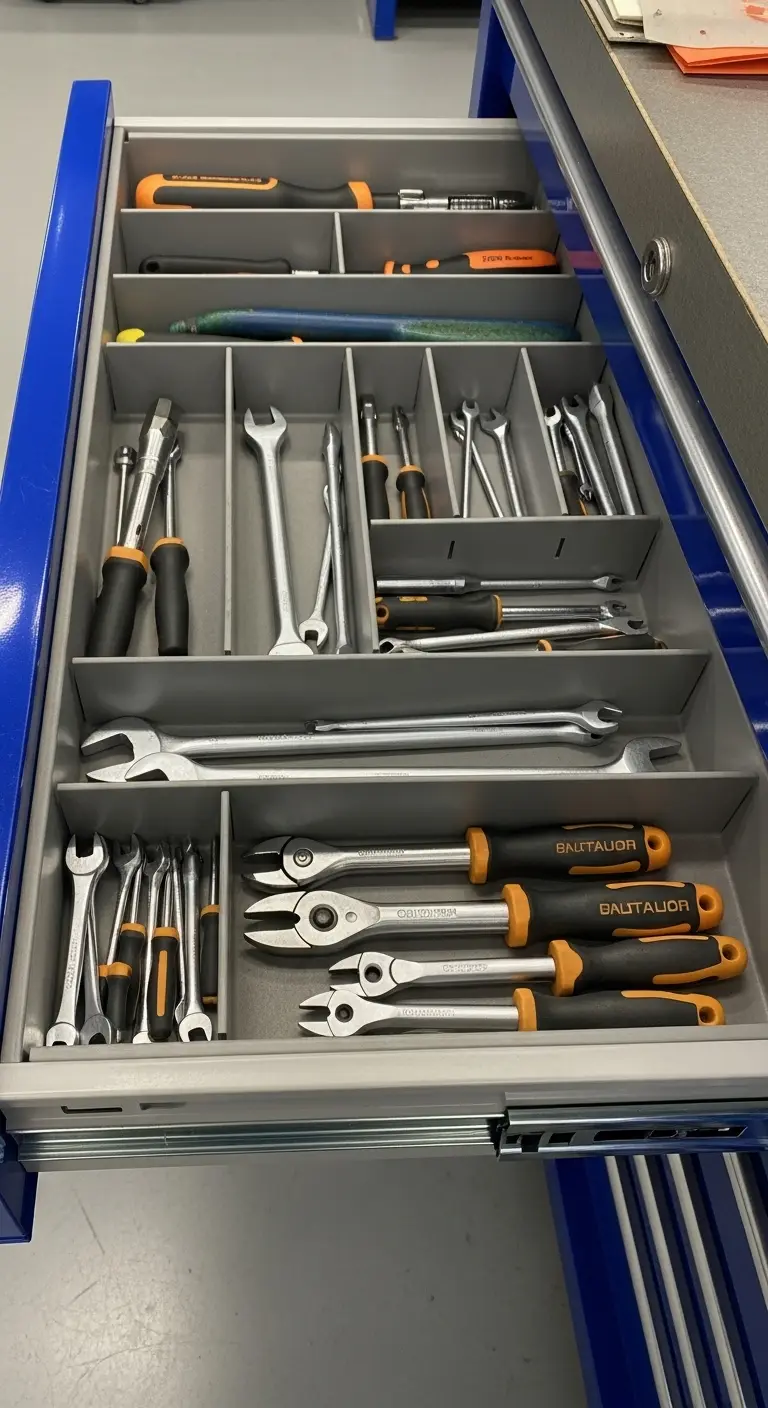
Drawer divider tool drawers create structure by separating tools into clearly defined sections. Dividers prevent tools from shifting, tangling, or colliding during drawer movement.
This organization improves visibility, allowing users to identify tools instantly. Adjustable dividers add flexibility for tools of varying sizes.
This approach supports consistent organization habits and faster workflow. Drawer dividers also help protect tool surfaces from unnecessary wear.
Using divider-based tool drawers keeps workspaces tidy and reduces time spent searching for specific tools.
Heavy-Duty Tool Drawers for Professional Workspaces
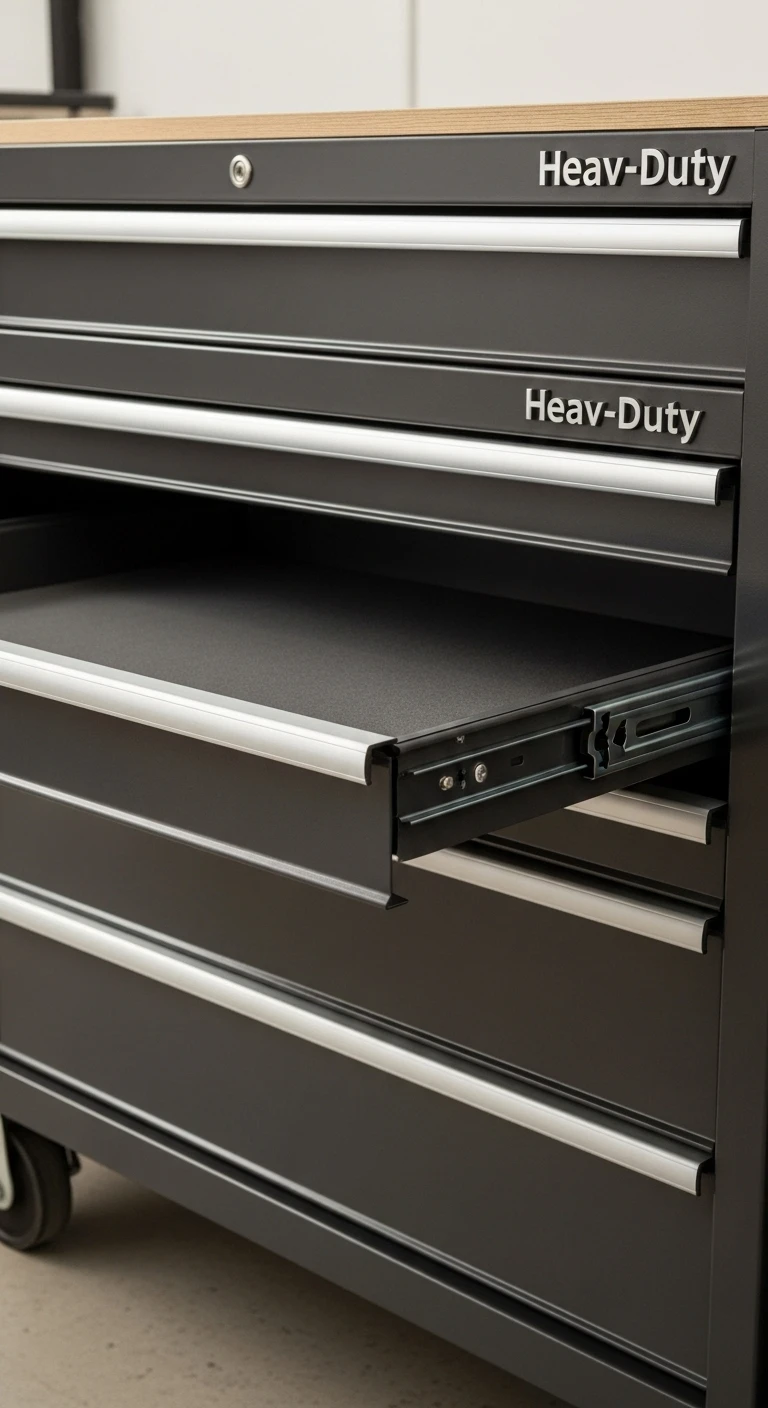
Heavy-duty tool drawers are designed to support frequent use and significant weight loads. Reinforced construction ensures stability when storing large or heavy tools.
Strong drawer slides allow smooth operation even under demanding conditions. These drawers perform well in professional workshops where reliability matters daily.
Heavy-duty designs improve safety by preventing sagging or sudden failure. This tool drawer idea supports efficiency by keeping essential tools securely stored and easily accessible.
Professionals benefit from durable storage that matches the intensity of their work environment.
Mobile Tool Drawers for Flexible Work Environments
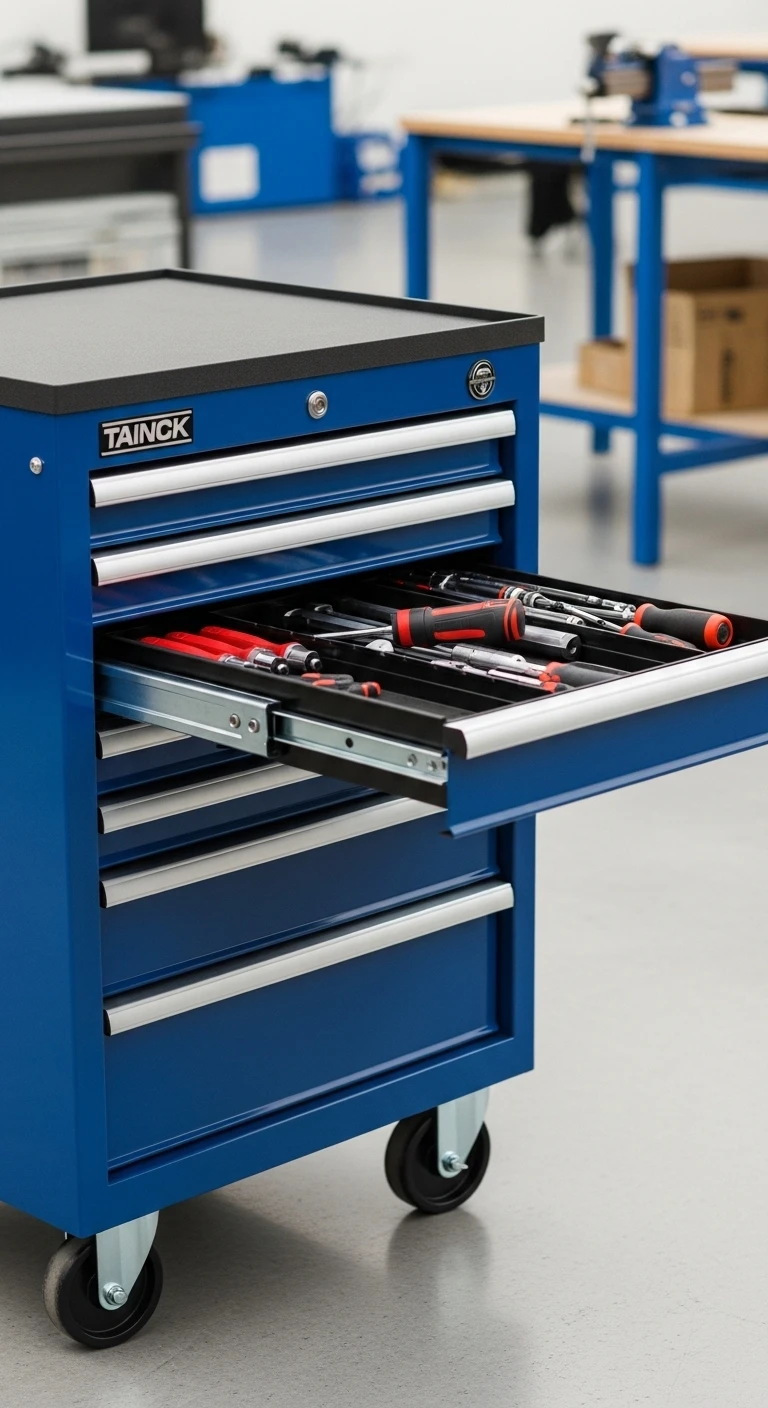
Mobile tool drawers improve efficiency by allowing tools to move easily between work areas. Casters provide mobility while maintaining drawer stability during use.
This design reduces unnecessary walking and saves valuable time. Mobile drawers work well in dynamic workspaces with changing tasks.
Locking wheels keep units secure when stationary. This tool drawer idea supports flexible workflows without sacrificing organization.
Mobile tool drawers help users adapt quickly while keeping tools accessible and well organized.
Vertical Tool Drawers for Maximizing Limited Floor Space
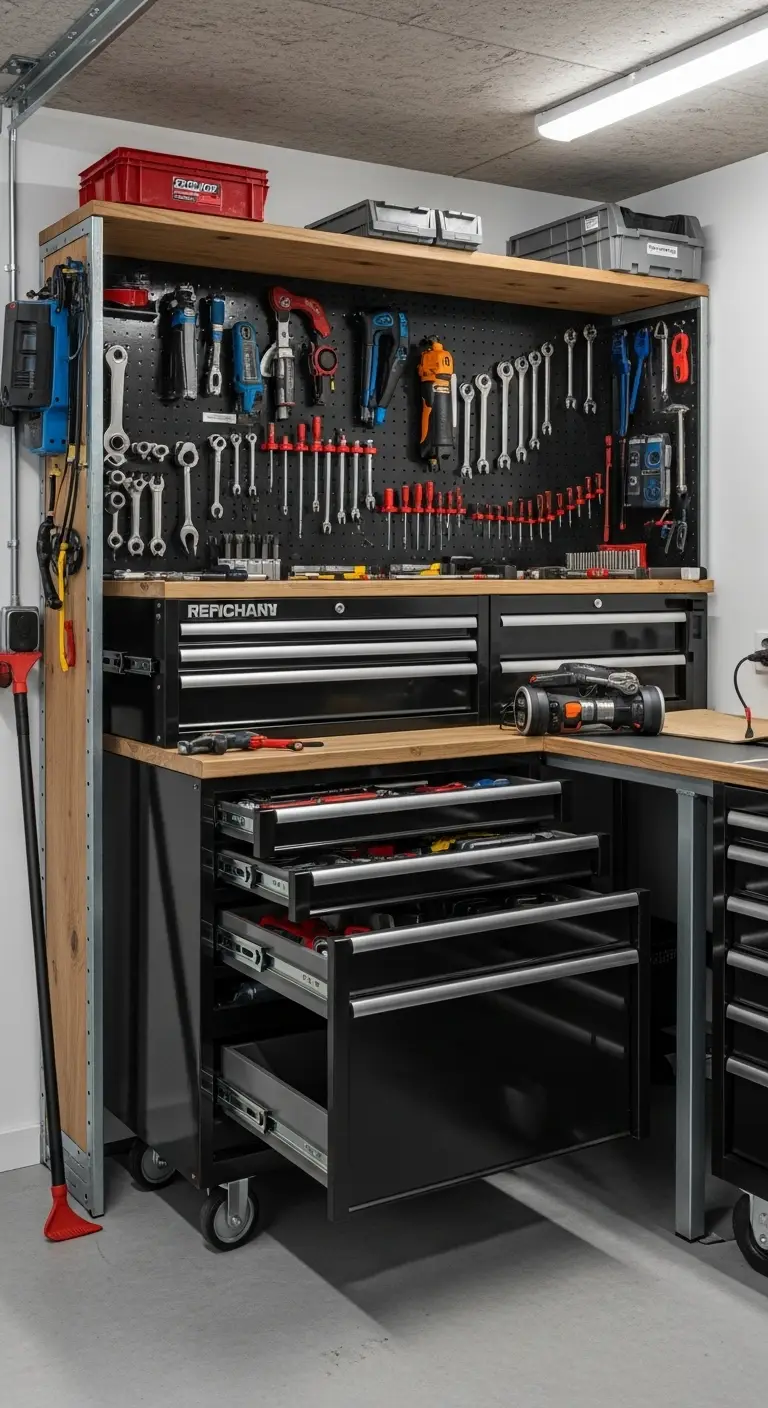
Vertical tool drawers help maximize storage capacity when floor space feels limited or heavily used.
These drawer systems use height efficiently, allowing tools to stay organized without expanding the workspace footprint.
Vertical layouts work especially well in compact workshops or garages with limited square footage. Organizing tools vertically improves visibility while keeping frequently used items within easy reach.
This approach also prevents overcrowding that often occurs with horizontal storage systems. By using vertical tool drawers strategically, users create cleaner layouts that feel open and functional.
This tool drawer idea supports smarter space utilization while maintaining accessibility and long-term organization.
Custom-Fit Tool Drawers for Specialized Equipment
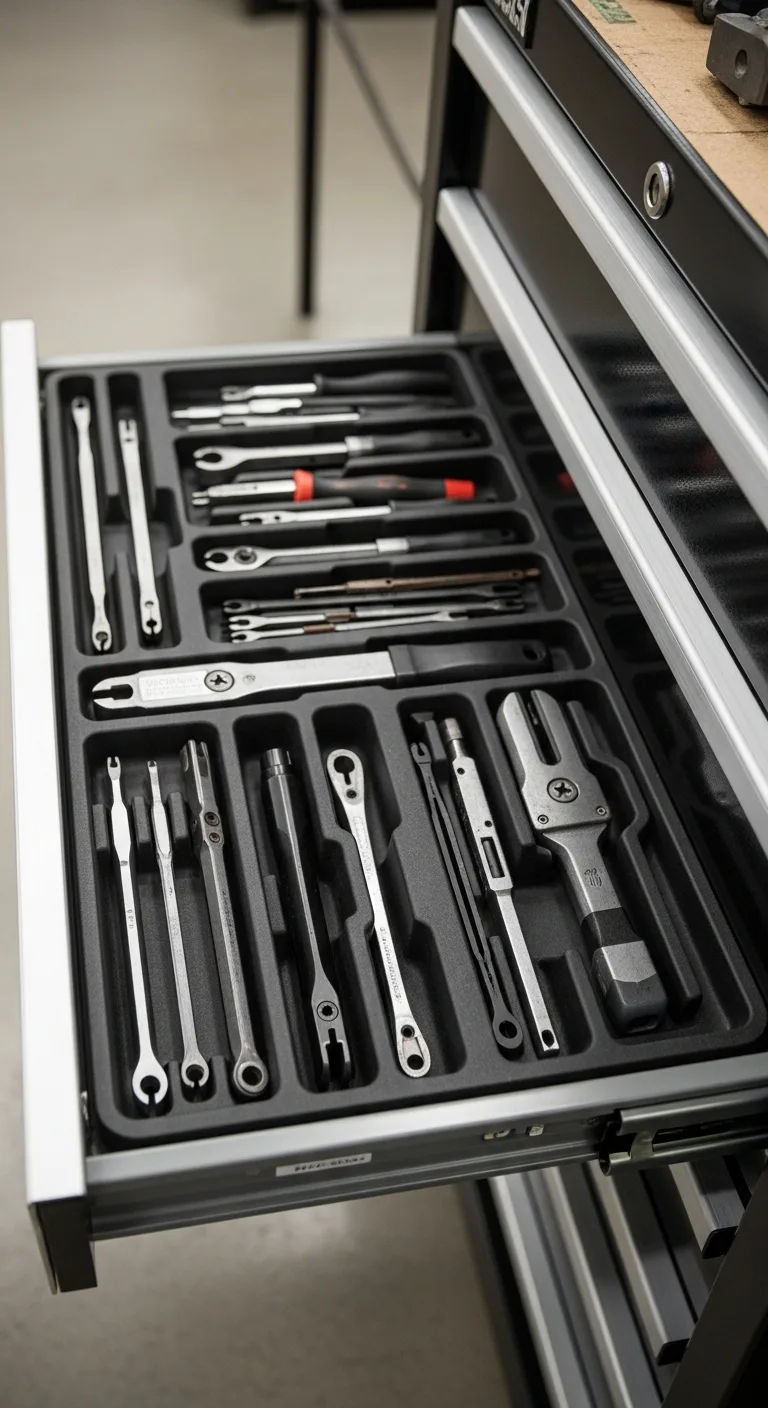
Custom-fit tool drawers provide tailored storage solutions for tools with unique shapes or specific handling requirements.
These drawers prevent unnecessary movement that can cause wear or damage over time. Custom layouts improve workflow by placing specialized tools exactly where users expect them.
This approach works particularly well for precision equipment or frequently repeated tasks. By designing drawers around specific tools, users reduce clutter and confusion.
Custom-fit tool drawers enhance consistency, protect investments, and improve overall efficiency. This tool drawer idea ensures specialized tools remain organized, accessible, and ready for regular use.
Multi-Material Tool Drawers for Strength and Visual Appeal
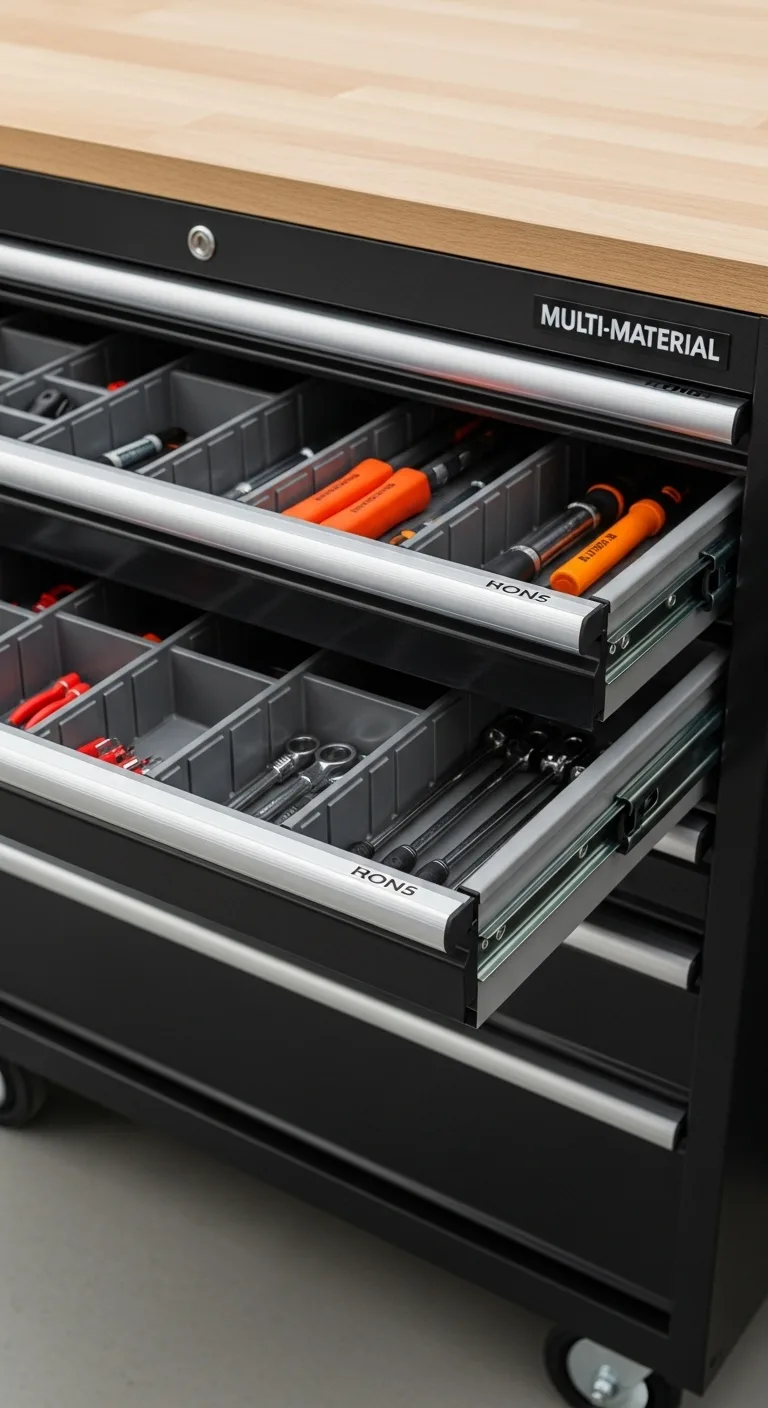
Multi-material tool drawers combine durability with improved visual organization within modern workspaces.
Using different materials enhances strength where needed while maintaining lighter construction elsewhere.
This balance supports long-term performance without unnecessary bulk. Multi-material designs also help differentiate drawer purposes visually.
Clear visual cues make organization easier to maintain consistently. By combining function and appearance, these tool drawers support both efficiency and workspace aesthetics.
This tool drawer idea suits users who value durability alongside a clean and organized working environment.
How Proper Tool Drawers Protect Tools and Extend Lifespan
Well-organized tool drawers protect tools by preventing unnecessary contact, moisture exposure, and surface damage.
Consistent storage reduces wear caused by stacking, shifting, or improper placement.
Drawers also help maintain cleanliness, which improves tool performance over time. When tools remain organized, users handle them more carefully.
This approach supports long-term reliability and reduces replacement costs. Proper tool drawers function as protective systems rather than simple storage units.
Common Tool Drawer Mistakes That Reduce Efficiency
Overloading tool drawers often leads to damaged slides and reduced usability. Ignoring weight limits causes premature wear and structural issues.
Poor organization wastes time and increases frustration. Mixing unrelated tools creates clutter and confusion.
Avoiding these mistakes improves workflow and drawer longevity. Thoughtful organization ensures tool drawers remain efficient and dependable.
Final Wrap-Up
Tool drawers should support organization, accessibility, and durability while matching real workspace needs.
By exploring these eleven tool drawers ideas, readers gain clear guidance for improving storage efficiency.
Thoughtful planning ensures tools stay protected and easy to access. When storage supports workflow, productivity improves naturally.
With the right tool drawers, any workspace can become organized, efficient, and enjoyable to use every day.